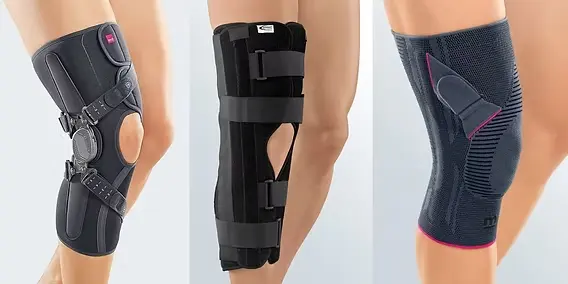
The knee is a complex joint that carries most of your body weight. Because it moves in many directions, it is often prone to injury and wear. When pain occurs, it can stop you from performing your basic daily tasks.
A knee brace is a tool designed to manage this pain and protect the joint from further harm. There are several different kinds of knee supports available today. Each one serves a specific purpose depending on the type of injury or discomfort you have.
Choosing the right knee support requires understanding how each design affects the movement of your leg.
The Purpose of Knee Support
The main objective of any knee support type is to provide stability, compression for pain relief, protection, and mobility enhancement.
i. Simple Compression Sleeves
The most common type of support is the compression sleeve. This is often referred to as a knee cap. These are usually made of elastic fabric or neoprene.
Features of Compression Sleeves
- Uniform Pressure: They provide an even pressure around the entire joint.
- Low Profile: These sleeves are thin and fit easily under most trousers.
- Warmth: The material traps body heat to soothe aching muscles.
- Swelling Control: Constant pressure helps move fluid out of the joint.
- Easy Maintenance: Most of these can be washed in a machine.
A sleeve is often considered the best knee cap for pain relief for minor issues. It is ideal for people with mild arthritis or general stiffness.
ii. Prophylactic Braces
Prophylactic braces are designed for prevention. Athletes often wear these to avoid injuries during high-impact sports. They are built to protect the ligaments from being stretched too far.
When to Use Prevention Braces
- High Contact Sports: To protect against hits from the side.
- Previous Injuries: To prevent an old injury from happening again.
- Heavy Lifting: To support the joint when carrying heavy loads.
- Unstable Surfaces: Useful for hiking on rocky or uneven ground.
These braces usually have some stiff parts, but still allow for a full range of motion. They ensure that even if you take a wrong step, the knee does not twist in a dangerous way.
iii. Functional Braces
Functional braces are used after an injury has already happened. These are much stronger than a standard knee cap. They are designed to take over the job of the damaged ligament.
Benefits of Functional Support
- Directional Control: They prevent the knee from moving side to side.
- Structural Integrity: They use metal or plastic stays to hold the leg straight.
- Custom Fit: Many of these have adjustable straps for a tight hold.
- Weight Distribution: They help shift weight away from the injured side.
Using a functional knee brace allows the internal tissues to heal without being stretched. It provides the user with enough confidence to walk without fear of buckling their legs.
iv. Rehabilitative Braces
After a surgery, the knee must be kept very still. Rehabilitative braces are used for this specific purpose. They are usually large and cover a big part of the leg. They often have a hinge that can be locked at a certain angle.
Characteristics of Post-Surgery Braces
- Limited Movement: They can be set to allow only a few degrees of bend.
- Full Protection: They guard the surgical site against accidental bumps.
- Adjustable Length: These can often be lengthened or shortened to fit the patient.
- Rigid Support: They offer the highest level of stiffness available.
Wear this knee brace for a few weeks post-surgery. As your strength returns, adjust the hinge for more movement. This knee support is a temporary but essential aid for recovery.
v. Unloader Braces
Unloader braces help with osteoarthritis. This knee support shifts pressure away from worn cartilage.
Why Use an Unloader?
- Pain Reduction: It stops the bones from grinding together.
- Improved Mobility: It allows for longer walks with less discomfort.
- Postponing Surgery: It can help a person delay the need for a joint replacement.
- Targeted Support: It focuses only on the part of the knee that hurts.
vi. Patellofemoral Braces
Some people only have pain at the very front of the knee, right under the knee cap. This is often because the bone is not sliding correctly in its groove. A patellofemoral brace helps guide the bone.
Features of Patellar Support
- Open Design: They often have a hole in the front for the bone to sit in.
- Tracking Guides: Small pads inside the brace push the bone into the right path.
- Daily Comfort: They are usually made of soft materials for all-day wear.
- Versatility: They work well for runners and people who climb many stairs.
How to Select the Right Option
With so many choices, selecting a knee brace can feel overwhelming. You should start by identifying exactly where the pain is located. Is it on the inside, the outside, or right in the middle?
Selection Criteria
- Level of Pain: Mild pain needs a sleeve, while sharp pain needs a hinged brace.
- Activity Level: Consider if you will wear it while sitting or while running.
- Size of Leg: Always measure your leg circumference before buying.
- Skin Sensitivity: Ensure the material does not cause a rash.
- Ease of Use: Make sure you can put the brace on without help.
The best knee cap for pain relief is the one that you can wear consistently. If it is too heavy or too hot, you will possibly refrain from using it. Look for a balance between support and comfort.
Conclusion
Understanding the different types of knee brace options is the best way to manage joint health. Whether you choose a simple knee cap for daily warmth or a functional knee support for a ligament injury, the objective is the same. You want to reduce pain and keep your body moving.
Every brace has a specific design meant to solve a specific problem. By matching the brace to your symptoms, you can protect your joints and improve your quality of life. Always ensure the fit is correct and the material is durable for the best results. Use these tools as a way to support your body’s natural healing process.